
Hamilton County Civil Docket Searches
The Nebraska JUSTICE Court Case Search is the statewide doorway to a current Hamilton County civil docket. Begin with a party name. That is often enough. Add Hamilton County, the court level, case type, case year, judge, or attorney only when the first pass returns too much, and the sort fields can tidy a long list. Civil, Small Claims, and Probate are all documented case types. Open a case and you may reach the caption, the parties, the Register of Actions, the setting history, the financial record, and any public images.
The online service carries a live $17 one-time charge for each name search, and you pay it even when nothing matches. Results stay viewable for three calendar days. Fresh entries can lag by roughly 24 hours. None of that forces you online. A free public JUSTICE terminal sits inside the Hamilton County Courthouse, clerk counters answer questions in person, mail requests work for certain needs, and the Nebraska Public Records Act opens a formal path when the online record falls short.
- Identify the likely court level from the case type, claim, or case number if known.
- Open JUSTICE, agree to the terms, and enter the party name with the correct spelling.
- Select Hamilton County and choose Civil, Small Claims, Probate, or another applicable type when that information is reliable.
- Open the case caption and read the Register of Actions from the complaint or petition through the latest order.
- Contact the District or County clerk with the case number when a filed document or certified copy is needed.
Note: Finding a case online does not mean every document image is there or unrestricted. Some filings stay sealed or simply never post.
Hamilton County Civil Dockets in JUSTICE
One JUSTICE interface serves both Hamilton County Court and Nebraska District Court records. The court-type filter matters when a name pulls up matters from both levels. The form splits individual parties from entities. It offers county, year, court, type, subtype, judge, attorney, and sort controls. A subtype appears only after you pick a case type. The goal is precision without overreach. Add enough accurate detail to land the right caption. Do not stack so many filters that you screen out the very case you want. The official JUSTICE demonstration shows the field layout used for civil searches. Treat its sample years and menu values as illustrations, not promises. The live service can differ from the demo page.
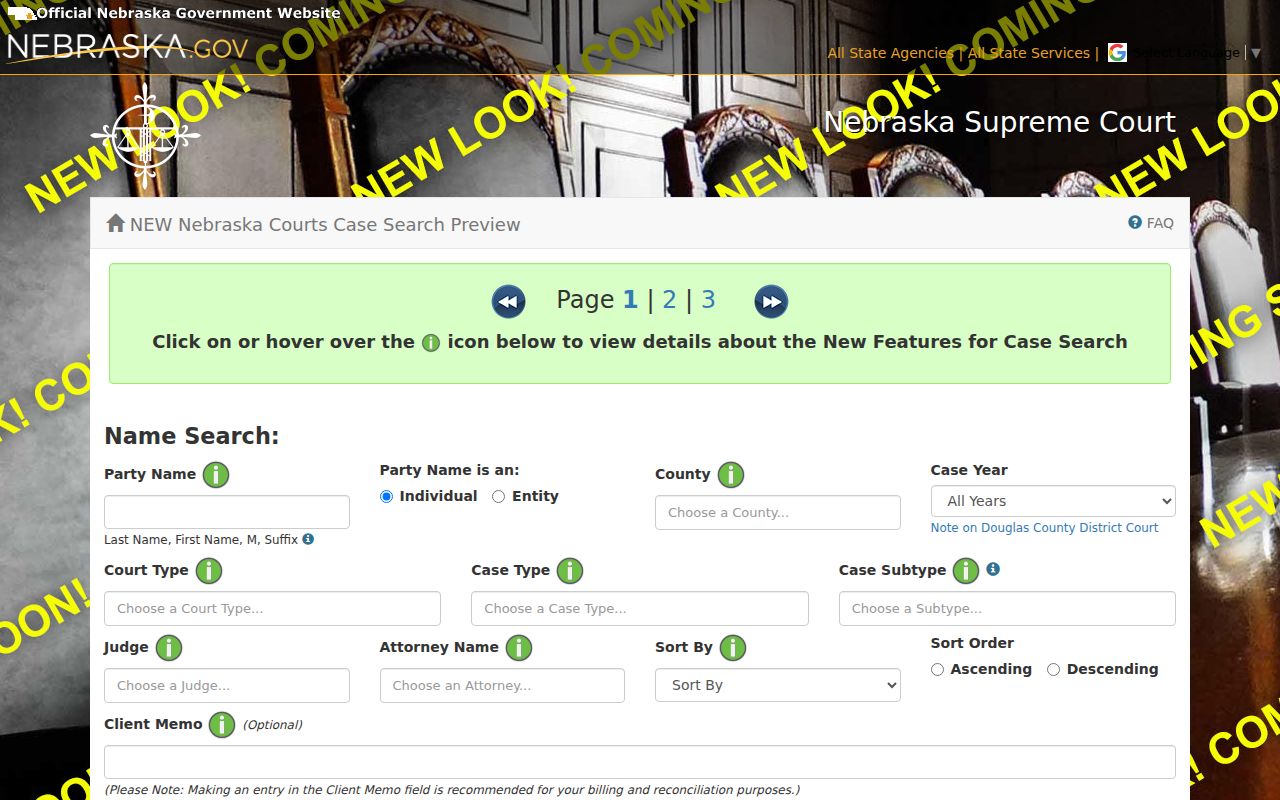
When a civil matter will not appear, spell the party name exactly. Drop filters that narrow too far. Run the name at the other court level too. Only then ask the clerk about the specific case. Anyone wanting a fuller name- or number-based route can use the county's Docket Search page, which walks through the same statewide channels and field logic.
Civil Dockets: What They Show
Think of the Register of Actions as the spine of a civil file. It runs in date order. It can show the case number, court, filing date, judge, caption, party roles, attorneys, civil subtype, settings, filings, orders, judgment, and public financial information. The District Court record rule draws a clear line. It separates the ROA from the case file itself. The ROA is a concise event record. The case file holds the actual pleadings, motions, orders, judgments, and other documents sitting behind those entries.
| Case ID and court | Prefix, Hamilton county code 41, type, year, sequence, court level, and assigned judge. A District civil model begins D41 CI-YY-.... |
|---|---|
| Parties and counsel | Plaintiff or petitioner, defendant or respondent, other public roles, and attorney appearance or withdrawal entries where shown. |
| Opening papers | Complaint or petition, summons or citation, service, return, answer, appearance, and related notices. |
| Case activity | Motions, discovery or scheduling entries, hearing notices, conferences, orders, and trial or dispositive-motion settings. |
| Resolution | Judgment, default judgment, dismissal, agreed order, settlement entry, appeal reference, and post-judgment filings where entered. |
| Documents and restrictions | Eligible public images may be linked, but protected, sealed, adoption, juvenile, or redacted material can be omitted. |
Never judge a case by a status word alone. An active matter can sit with no pending motion, and a disposed one can still collect post-judgment filings. What controls is the dated order, judgment, or other event in the sequence.
Hamilton County Civil Docket Courts
Hamilton County civil dockets split by jurisdiction. Nebraska District Court is the general-jurisdiction venue for major civil and domestic matters. Hamilton County Court handles civil claims up to $70,000 under the current judiciary material. Small claims stop at $7,500. Older graphics on court structure show lower caps. So trust the current fee and jurisdiction material when routing a modern case.
| Court or docket | Hamilton civil work | Where to begin |
|---|---|---|
| Nebraska District Court | Major civil, domestic relations, and other general-jurisdiction matters; County Court appeals also move here. | JUSTICE District Court filter, then District Clerk Wendy C. Dethlefs for the case file. |
| Hamilton County Court | County civil matters within the limit, small claims, probate, guardianship, conservatorship, adoption, and related matters. | JUSTICE County Court filter, then County Court Clerk Carly Noack. |
| City or village ordinance venue | No separate official Hamilton municipal civil docket was located in the reviewed sources. | Check the citation or filing for venue and use County Court unless it identifies another court. |
A transfer, an appeal, or a post-judgment filing can spawn a new case reference. Check the other court level first. If the ROA points there, search that new docket number rather than assuming the original file holds every later event.
What Cases Fill the Civil Docket
One civil docket can hold contract, property, money, tort, domestic, protection-order, probate, guardianship, conservatorship, adoption, and small-claims matters, plus anything else within the court's jurisdiction. Hamilton County Court's FY2025 report counted 434 civil cases. Separate smaller buckets cover probate, guardianship or conservatorship, small claims, and adoption. That mix matters. A civil search should not stop at the plain civil label when the real matter is probate or small claims.
The District Court Hamilton docket carries the larger civil and domestic work. Its FY2025 report lists 37 civil cases, 46 domestic-relations cases, and 35 protection orders, among other categories. Treat those numbers as reported case categories. They are not a live count or a forecast of how long any case takes. For a specific matter, rely on the case type. Also use the court field and the ROA entries.
Hamilton County Civil Probate and Guardianship Dockets
Probate, guardianship, conservatorship, and adoption cases all live in Hamilton County Court. The county-court jurisdiction statute places them there. Petitions and hearings make them feel civil. But their docket path and their confidentiality limits are not always the same as a standard contract or property dispute. Start a search with County Court and the Probate case type, or a fitting subtype. Then work through the caption and the Register of Actions.
Not everything shows up online. Adoption records and protected family material may be limited. So may juvenile information and sealed filings, and they may carry no document image at all. A restricted result means restricted access, not a case that never existed. Ask Clerk Carly Noack what lawful access route fits the case you identified.
Hearings on the Civil Docket
A Hamilton County civil docket can hold many kinds of settings. Motion hearings, scheduling entries, pretrial conferences, trials, hearings on orders, and post-judgment proceedings all appear. When a notice of hearing is filed, it becomes one dated event in the ROA. A continuance or reset later in the file does not erase that first entry. So read the dated entries in order. Treat the most recent setting as the likely current one. When a date truly matters, confirm it with the clerk or court coordinator.
The free Multi-Court Case Calendar handles searches by date, future date, or last name. JUSTICE carries the fuller case history. Before you run the query, choose County Court or District Court and then Hamilton. One caution: a no-result calendar search does not prove there is no setting. Entries can lag, and calendar coverage can shift over time.
Hamilton County Civil Docket Numbering
Nebraska case numbers stack up in pieces. A court letter comes first. Then a county code, a case-type code, a year, and a sequence number. Hamilton County carries the code 41. The documented District Court civil model starts with D41 CI-YY-..., where CI marks a civil case. County Court numbers usually open with C41 and then add the type code. Treat these as reading aids only. Get the complete number from JUSTICE, the calendar, a court notice, or the clerk.
- Service and return
- The ROA entries that show whether court process was issued, served, or returned.
- Appearance
- An entry showing that a party or attorney has formally entered the case.
- Default judgment
- A judgment entry that should be read with the underlying service, notice, and order history.
- Post-judgment filing
- A later filing related to the judgment, such as payment, execution, garnishment, or appeal activity where filed.
Who Can See Civil Dockets
Nebraska's public-access rules open up a lot. Court calendars, indexes, ROAs, judgments, orders, decrees, and available images are all reachable through JUSTICE, courthouse terminals, remote services, and the clerk. The rules keep limits in place too. Personal identifiers may be redacted. Sealed, juvenile, adoption, and protected family content can be withheld. A portal image, where one exists, is a convenience. It is never a clerk certification.
At the courthouse, a free public terminal runs during office hours. Ask the right clerk to pull a particular file or copy a specific document. District Court civil files sit with Wendy C. Dethlefs, 1111 13th Street, PO Box 201, Aurora, NE 68818, (402) 694-3533, and the official Hamilton District Court page and the Hamilton County District Court office page give the local office reference. Carly Noack keeps the County Court files at 1111 13th Street, PO Box 323, Aurora, NE 68818, (402) 694-6188, and the official Hamilton County Court page carries the matching contact. Both offices list fax (402) 694-2250. Confirm with the office before faxing a request.
A mail request should name the court. It should also list the complete case number, party names, the exact document, plain or certified format, a return address, and contact details. For the formal public-records channel, judicial policy points to the State Court Administrator. Public records law sets a clock. Under Nebraska Public Records Act timing, an access, estimate, denial, or explanation response is due as soon as practicable and no later than four business days. That is not a guarantee a complex file arrives within four days. Nebraska.gov eFiling serves authorized filers, and it is not a separate public civil docket search.
Hamilton County Civil Docket Copies
The current Nebraska court fee schedule splits filing and court-cost lines from copy charges. For case records, Neb. Rev. Stat. §33-126.05 sets plain photocopies at $0.25 per page. Certification or seal costs $1.00. The schedule lists a County Court civil filing and cost line at $62 to $82 depending on the claim tier. Small claims carry a $58 line. Those filing amounts are not the price of a docket copy.
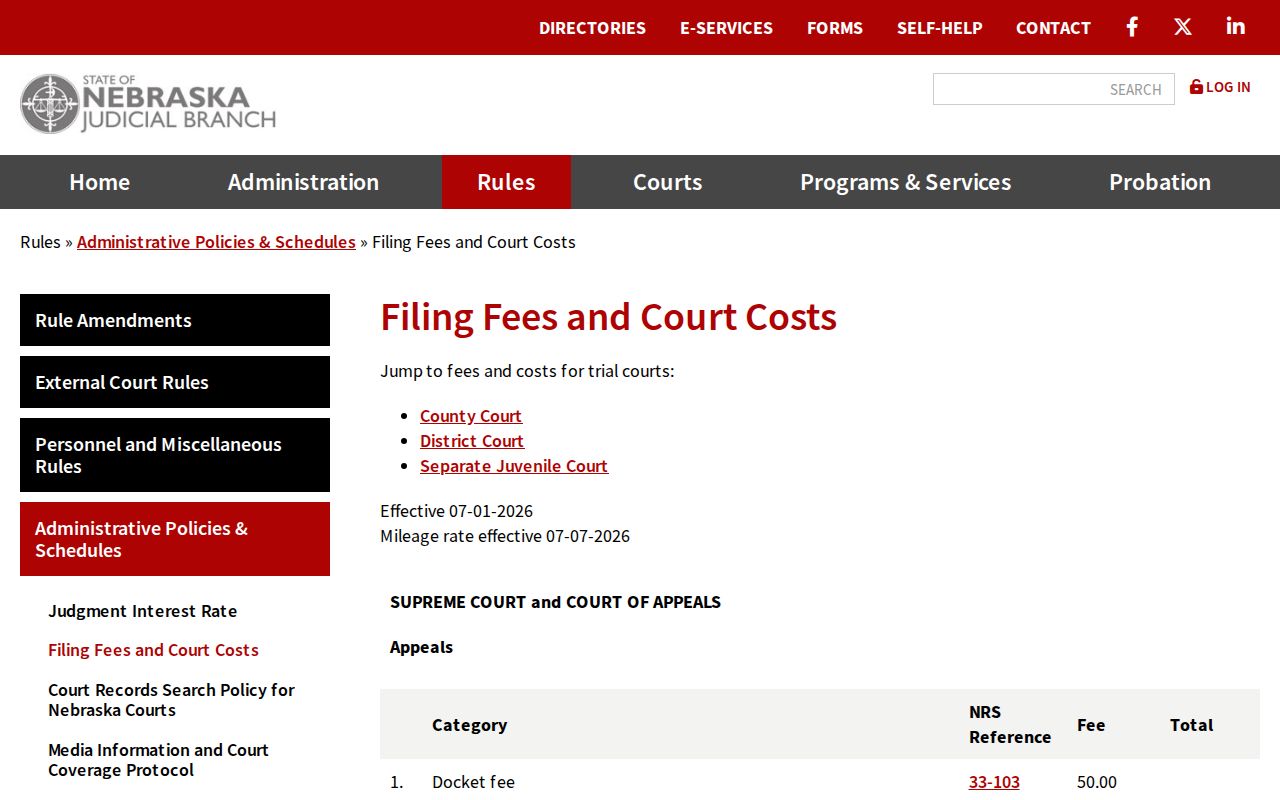
The statewide fee schedule is a good starting reference. Still, ask the Hamilton clerk to confirm payment method, postage, certification, and any amount not explicitly published for the record you want.
Older civil research may take a different path. The Nebraska State Archives lists Hamilton County holdings. They include an 1887 to 1894 Default and Judgment Docket volume. Check with the clerk first on whether the original or a copy is held locally. Bound docket books, indexes, microfilm, and archived records can fill in historical case details. They help when the modern portal has no image.
Note: A judgment image may identify an order, while the clerk provides the authenticated copy when certification is required.